

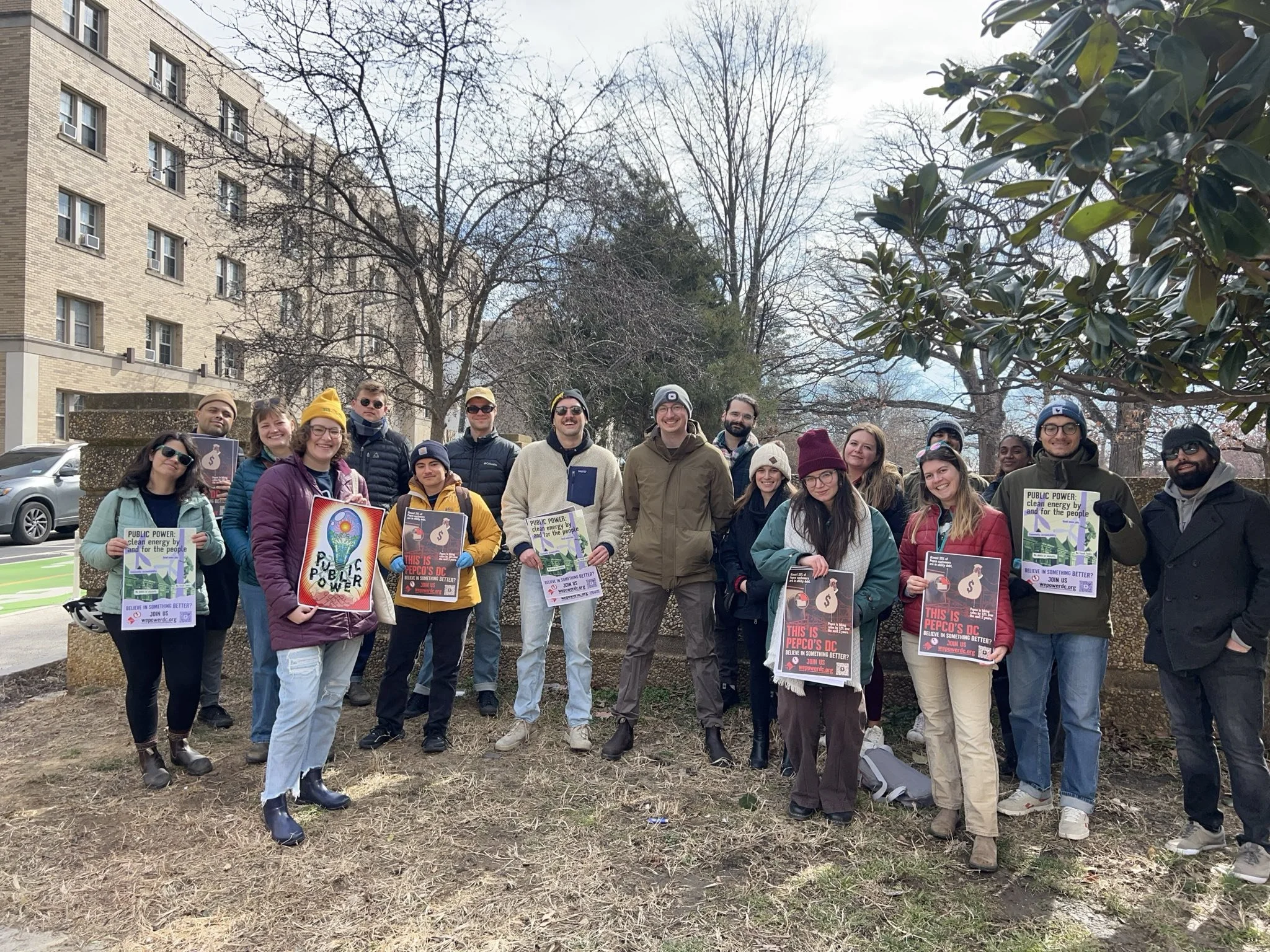
The Public Power Pledge
DC’s electric utility should serve the public, not private profit.
We Power DC's Public Power Pledge outlines our vision for a publicly-owned energy system. It calls for replacing Pepco with a publicly owned municipal utility that is democratic, transparent, sourced from 100% clean energy, and directly accountable to the people of DC. Whether you are an elected official, candidate, or a DC resident, sign the pledge today to show your support for public power.
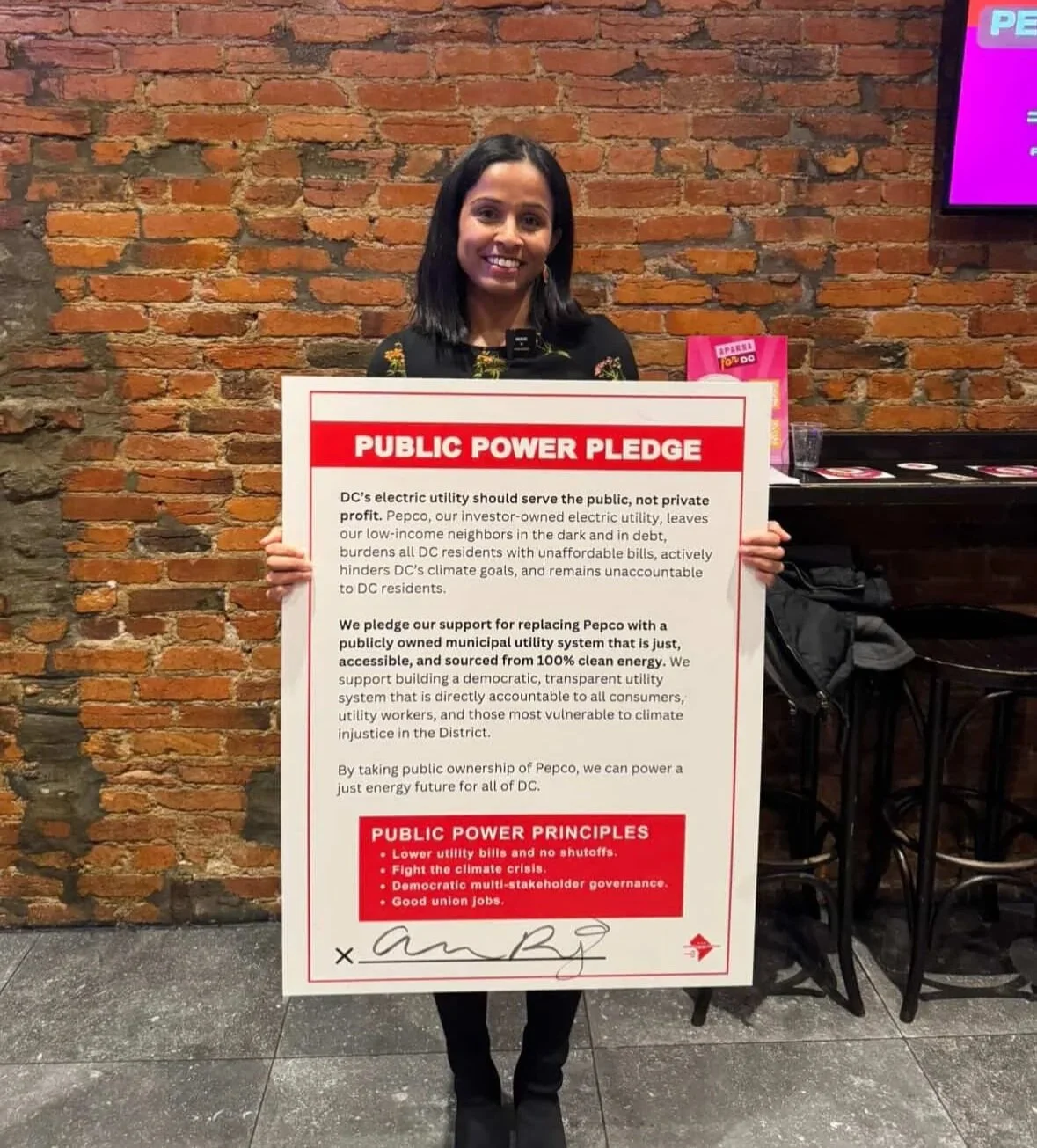
Candidates who have signed the Public Power Pledge in 2026:
Aparna Raj, Ward 1 Council Candidate
Oye Owolewa, At-large Council Candidate
Leniqua'dominique Jenkins, At-Large Council Candidate
Deirdre Brown, Nonvoting House Delegate Candidate
Rashida Brown, Ward 1 Council Candidate
Public Power Principles:
Lower utility bills and no shutoffs: Our utility system must treat everyone with dignity. Investor-owned utilities like Pepco prioritize expensive capital investments that result in higher energy costs for consumers and higher profits for their shareholders, while a publicly owned, not-for-profit utility system would treat energy as a public good, ensuring everyone has access to affordable and reliable electricity regardless of their ability to pay. Access to energy is a human right, and DC’s utility system should reflect this.
Fight the climate crisis: At this critical moment in the climate crisis, we must swiftly transition to a zero-emission utility system and ensure that the costs of that transition are not passed on to DC’s most vulnerable residents. Pepco is resisting these changes, but a public utility would prioritize a just transition that creates jobs and brings investment and resilience into our communities.
Democratic multi-stakeholder governance: Everyone―from utility workers to consumers―has a stake in our utility system and deserves a say in how it functions. Our mayor-appointed Public Service Commission, which oversees DC’s utilities, has failed to represent the will of DC’s working people. A public power utility would offer DC residents the opportunity to decide where their energy comes from, how revenue is managed, and where energy infrastructures are sited across our communities.
Good union jobs: The number of IBEW members employed by Pepco has declined over the past 15 years, while Pepco has increased the number of underpaid, uninsured contracted workers. No one should be denied the wages needed to pay their own utility bills and feed their families, including the workers who maintain critical energy infrastructure for thousands of others. A public utility will put workers, not shareholders, first.